

The first question most people ask about clearing land is "What does it cost per acre?" The honest answer is that two acres in the Upstate can cost very different amounts depending on what's growing on them, what's under them and what you plan to build. This post walks through what actually drives the price, so you can read a quote with confidence and spot where you might save.
A per-acre number is a starting point, not a quote. Contractors price the work by how many machine hours it will take and what has to happen to the material afterward. An acre of thin brush and young pines might be done in part of a day. An acre of mature hardwoods with big stumps on a slope can take several days and a lot more trucking. Same acreage, very different job.
Tree size and density matter more than anything else. Brush, briars and pines a few inches across can be ground in place in one pass. Large hardwoods have to be cut, moved and dealt with piece by piece, and their stumps are bigger and deeper.
If you only need a lot opened up for access, a view or pasture, stumps can often stay. If you're building, they have to come out wherever the house, driveway and yard will go. Pulling stumps, filling the holes and leaving the ground ready for grading adds time to every acre where it's needed.
This choice can swing a price more than people expect. There are three main options:
Steep ground, creeks, wet spots, rock and tight access all slow machines down. Upstate red clay is a factor too: when it's wet it gets slick and soft, so heavy equipment can rut it badly. A good contractor plans around the weather instead of tearing up your site.
In South Carolina, clearing, grading or other land disturbance of one acre or more needs coverage under the state's construction stormwater permit, and sites under an acre still file a notification form, according to SCDES. Many counties and cities in the Upstate also run their own stormwater programs. Larger sites need a stormwater plan, silt fence, construction entrances and seeding, and all of that is part of the cost.
Clearing for a pasture or a hunting lane is a different job from clearing for a house pad. If the lot will be graded afterward, it usually makes sense to have one crew do the clearing, topsoil stripping and grading in one mobilization instead of paying to move equipment in twice.
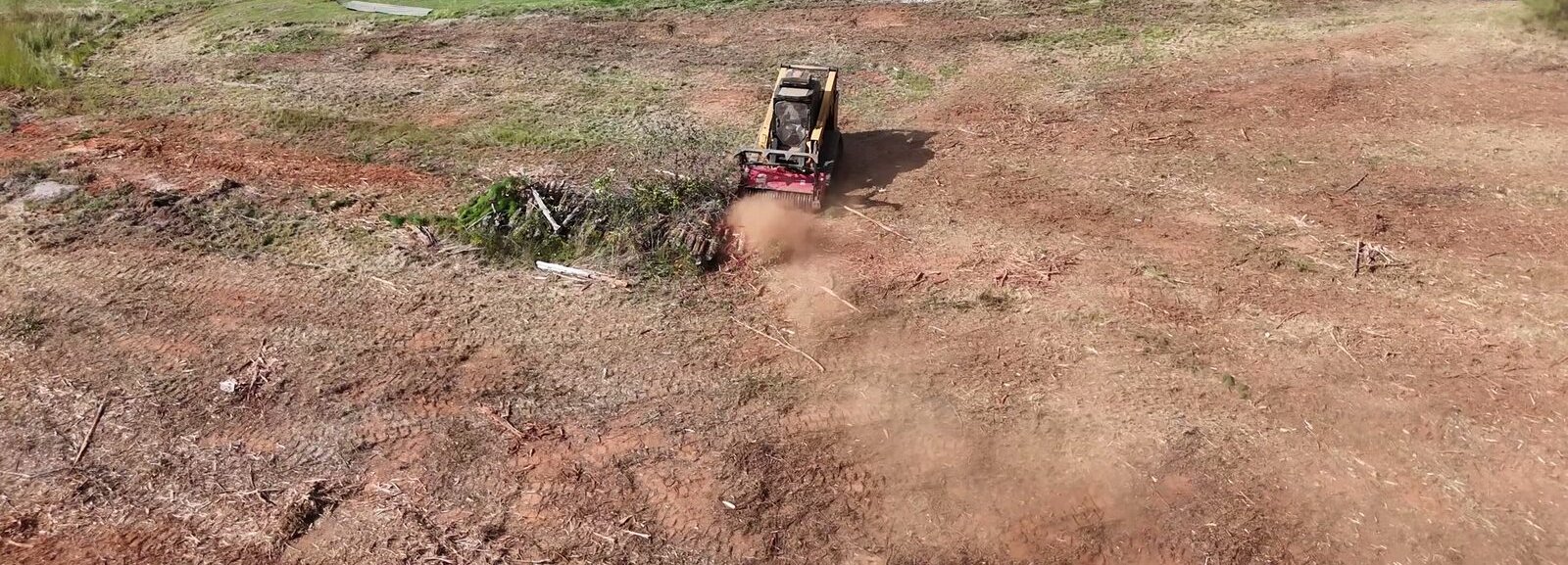
These two get mixed up a lot, and choosing the right one is one of the easiest ways to control cost.
Many jobs use both: mulch the edges and the areas staying wooded, and fully clear only the footprint you'll build on.
It depends on tree size and density, whether stumps come out, what happens to the debris, the slope and access, and any permit or erosion control work. A thin acre of brush can cost a fraction of a heavily wooded acre on a slope. The only way to get a real number is to have the property walked.
For brush and smaller trees it usually is, because there's no hauling or burning and fewer machines on site. But mulching doesn't remove stumps, so it isn't a replacement for full clearing where you're building.
Land disturbance of an acre or more needs state construction stormwater permit coverage, and smaller sites still file a notification form with SCDES. Your county or city may have its own requirements, and burning debris has its own rules. Your contractor should help you sort out what applies.
Late fall and winter work well in the Upstate. The leaves are down, the ground is often firmer in dry spells, and the lot is ready for the spring building season.
Renew Land Management is a Navy veteran-owned site contractor clearing and grading land across Greenville, Spartanburg, Anderson and Pickens counties, including Greer, Simpsonville, Travelers Rest, Spartanburg, Anderson and Easley. We'll walk your property and give you a written quote. Get a Free Quote.
Renew Land Management handles land clearing, grading, drainage, utilities and septic work across the Upstate, with one crew from start to finish.
Get a Free Quote


