
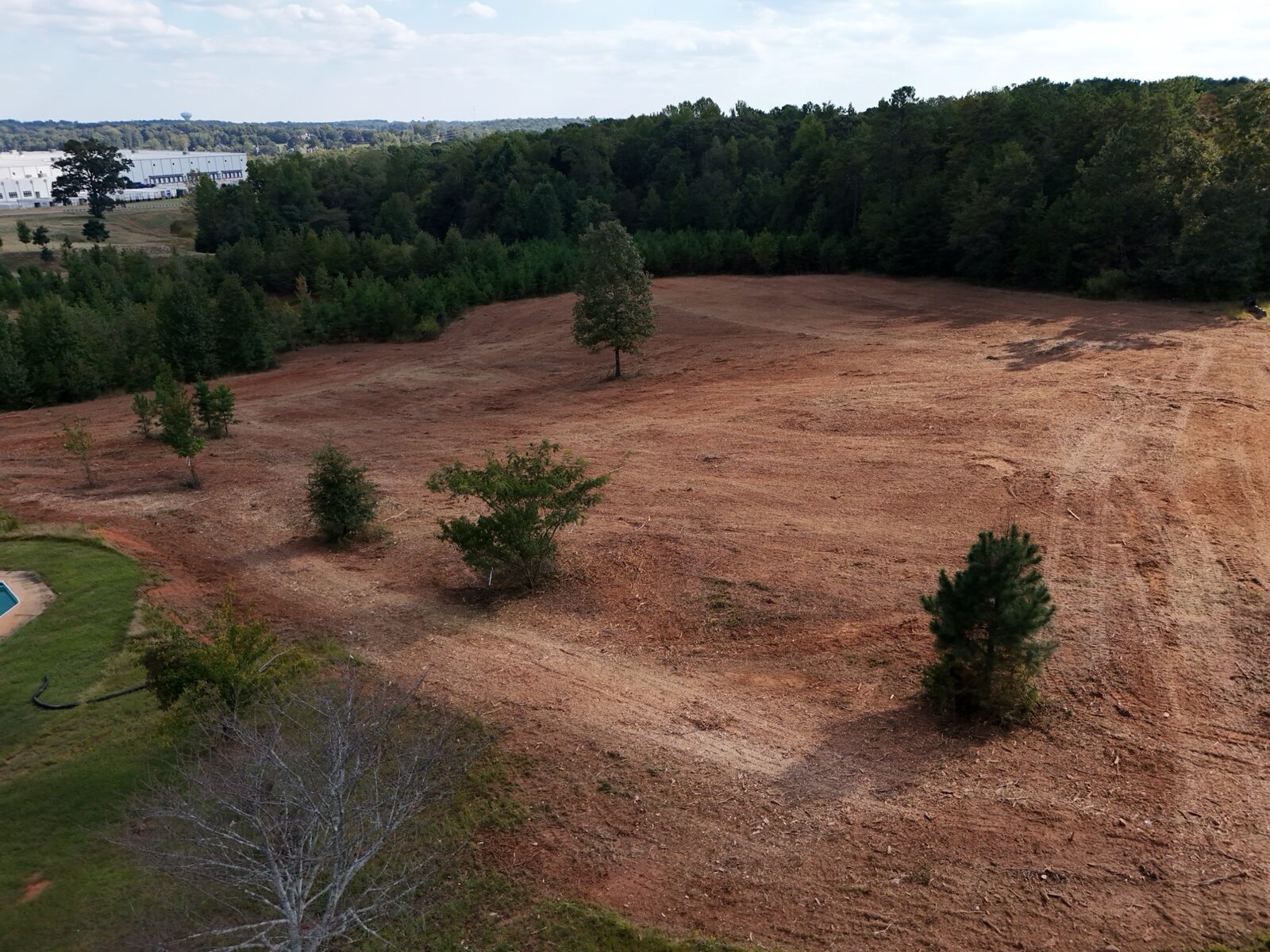
On September 28 this lot in Anderson looked like a lot of the land around the Upstate: thick young pines, briars and brush, too dense to walk through. By October 1 it was open ground you could see across, with the tree line still standing along the edges.
We cleared it with a forestry mulcher. Here's what that is, how it compares to the old way of clearing land, and how to tell whether it's the right fit for your property.
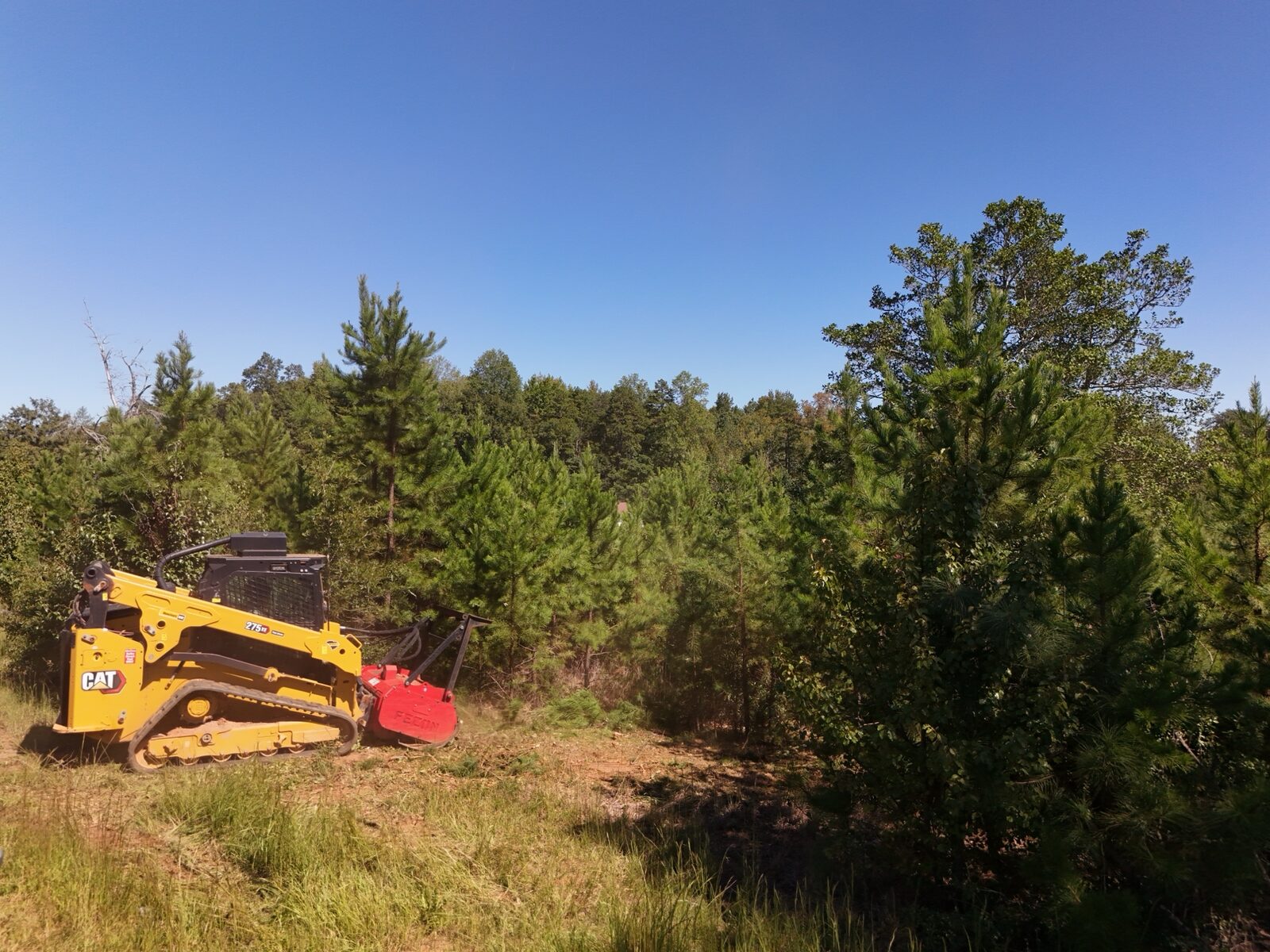
A forestry mulcher is a heavy-duty rotating drum with steel teeth, mounted on the front of a tracked machine. It grinds standing trees, brush and stumps down to mulch right where they stand, in a single pass.
There's no cutting and stacking, no burn pile, and no trucks hauling debris off the site. The mulch stays on the ground as a layer of cover.
Traditional clearing usually takes several machines and several steps: cut the trees, push them into piles, then burn the piles or haul them away. Forestry mulching rolls that into one machine and one step.
The mulch left behind isn't just leftovers. It covers bare soil, helps slow rainwater, and holds the ground in place while new growth comes in. On sloped Upstate lots, where red clay washes easily in a hard rain, that matters.
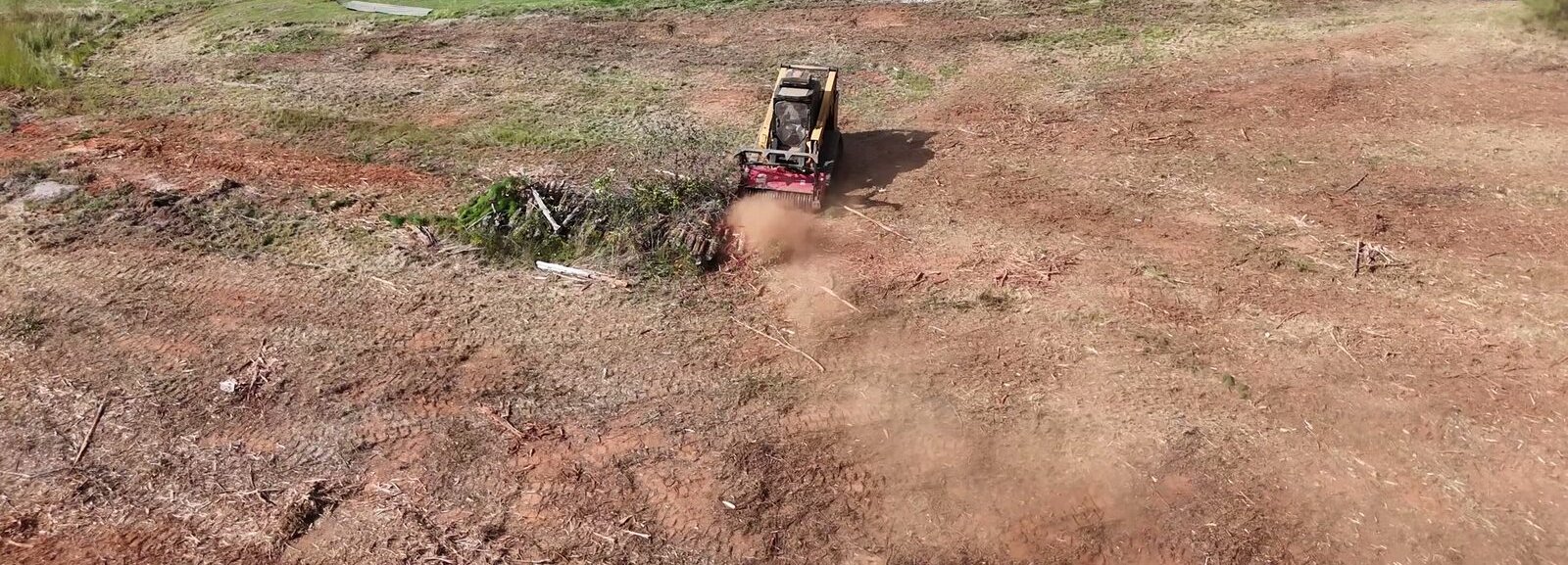
One of the best things about mulching is that it's selective. You don't have to clear everything. We can leave shade trees, hardwoods, a buffer along the property line, or stands of pines. On this job, trees were left standing along the tree line and in island stands across the site.
Mulching is a good fit when you want to:
It's not the whole job when you need large timber taken down or the site graded for a house. Stumps have to come out in the footprint of the house and yard, so on homesites we pair mulching with stump removal, excavation and grading. It's still one crew from clearing to final grade. See our forestry mulching and land clearing services for more.
Every lot is different, so we price it after we walk it. The biggest factors are:
Mulching grinds stumps down to about ground level. On a homesite, stumps in the footprint of the house and yard have to be removed completely, so we pull those and grade the area as part of the site work.
It stays on the ground, where it covers bare soil and breaks down over time.
It depends on acreage and density. This Anderson lot went from thick pines to open ground between Sept 28 and Oct 1.
Yes, if you're in the Upstate. We work across Anderson, Greenville, Spartanburg and Pickens counties.
Renew Land Management handles forestry mulching, land clearing, grading, drainage and septic work across the Upstate, with one crew from start to finish. Request a free quote and we'll come walk your property.
Renew Land Management handles land clearing, grading, drainage, utilities and septic work across the Upstate, with one crew from start to finish.
Get a Free Quote


